
EV charging · Multifamily
EV charging infrastructure for shared garages
In a shared garage, the charger is the easy part. The real questions are where power comes from, how it is metered and paid for, and how the building can support more chargers over time.
Overview
Three ways to power a shared-garage charger
Most shared-garage installations use one of three approaches:
- From the resident's own unit panel. Usage is billed to the resident automatically, but the circuit may need a long run from the unit to the garage, and the unit panel needs spare capacity.
- From the house (common-area) panel. Shorter runs, but electricity is billed to the building; the charger may need a way to track or charge for usage.
- From new dedicated equipment. A new subpanel or service for EV charging, sometimes with separate metering, designed to support multiple chargers.
The right approach depends on the building's layout, capacity and policies — and often on plans for future chargers.
Start with
- Your HOA or owner
- Your building's EV policy (if any)
- Parking space assignment
- Location of unit and house panels
Situations
Common reasons people look into this
-
A resident requests a charger
The first request is often the moment a building needs a policy.
-
Several residents want chargers
Individual installs can use up capacity; a shared plan may serve more people.
-
HOA planning a capital project
Building-wide EV readiness as part of long-term planning.
-
Rental building amenity
Owners adding charging for current and future tenants.
-
Assigned versus unassigned spaces
Affects whether chargers are private or shared.
-
Limited building service
Load management may be essential.
Technical
Technical considerations
Load management at building scale
When many chargers share limited capacity, load management (sometimes called power sharing or energy management) dynamically divides available current among active chargers. This can allow more chargers to be installed than the service could support at full power simultaneously — a common strategy in older buildings.
Metering and cost recovery
Options include chargers with built-in usage tracking and billing features, separate meters, or connecting to unit panels. Each has different cost and administrative implications for the building.
Future-proofing
Installing conduit, pathways and panel capacity for future chargers while the first ones go in is often far less disruptive than adding infrastructure repeatedly.
Assessment
What an electrician typically evaluates
Every property is different. A qualified electrician will usually look at the following before recommending any work.
-
Building service and garage power sources
Available capacity at house and unit panels and at the main service.
-
Distances and routes
From each potential power source to parking spaces.
-
Number of chargers now and later
Present demand and expected growth.
-
Load management suitability
Whether power sharing fits the building and charger choices.
-
Metering and billing approach
How usage will be tracked and paid for.
-
Approvals and policies
HOA or owner approval and any building EV policy.
Talk through your situation
A short call can help you understand what an on-site assessment would involve.
Local context
San Francisco housing considerations
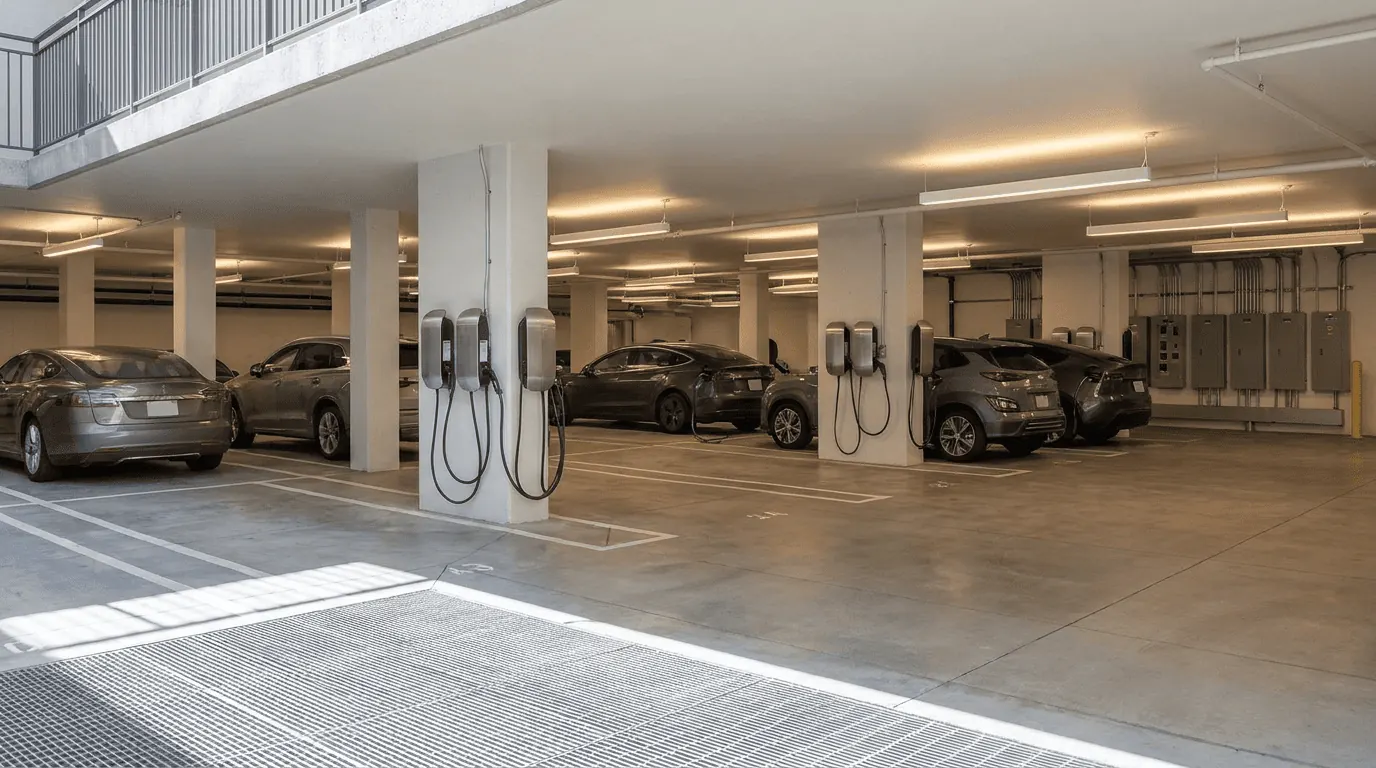
Many San Francisco condo and apartment buildings have compact garages with tight clearances, stacked or tandem parking, and electrical rooms or meter banks in a corner of the garage. Older buildings may have limited service capacity. These conditions make building-level planning and load management especially relevant.
California law addresses EV charging requests in common interest developments (Civil Code section 4745) and from tenants (Civil Code section 1947.6), including conditions such as approvals and insurance. Boards and owners should review the current text and get legal advice where needed.
Permitting
Permits and inspections
New circuits, subpanels and service changes for EV charging require electrical permits through San Francisco DBI; service changes require utility coordination. Larger installations may require engineered plans.
Approvals from the HOA or building owner are separate from permits and should be in place before work begins.
Not legal advice. Permit requirements depend on the exact scope of work and the codes in force when the permit is issued. The provider performing the work is responsible for determining and obtaining the correct permits.
Frequently asked questions
Can my HOA refuse my EV charger request?
California law limits an HOA's ability to prohibit or unreasonably restrict EV charging in some circumstances, while allowing reasonable conditions. The details matter; review Civil Code section 4745 and your governing documents, and consult an attorney for disputes.
Who pays for the electricity?
It depends on the power source and building policy: unit-panel installations bill the resident; house-panel installations need a cost-recovery method such as metering or charger-based billing.
What is load management?
A system that shares available electrical capacity among chargers, reducing their power when total demand is high. It can allow more chargers on a limited service.
Should we install one charger or plan for many?
If more residents are likely to want charging, planning infrastructure for future chargers is usually more efficient than repeated one-off installs.
Official resources
Requirements change. Check current information directly with these official sources.
- San Francisco Department of Building Inspection (opens in a new tab) www.sf.gov Permits and inspections for electrical work in San Francisco.
- PG&E (opens in a new tab) www.pge.com The electric utility serving most San Francisco addresses; involved in service upgrades and meter work.
- CSLB license lookup (opens in a new tab) cslb.ca.gov Check a contractor's license number, classification and status before hiring.
Ready to talk to an electrical professional?
Call to speak with an electrical professional who can assess your property and explain your options.