

Capacity
Electrical load management for homes and buildings with limited capacity
Before upgrading your electrical service, it is worth asking whether your existing capacity can be used more intelligently. Load management can sometimes make room for EV chargers, heat pumps and electric appliances.
Overview
Using the capacity you have
Electrical services are sized for the maximum demand a home might draw. In practice, a home rarely uses everything at once. Load management takes advantage of that by monitoring demand and reducing or pausing certain loads when the total approaches the service limit.
Common examples include an EV charger that slows down while the oven and dryer run, a circuit-level controller that alternates between a water heater and a charger, or a smart panel that sheds non-essential circuits. Where it is appropriate and allowed, this can reduce or postpone the need for a service upgrade.
Two parts
- A load calculation shows where you stand.
- Management devices keep demand within limits.
Both should be designed by a qualified electrician.
Situations
Common reasons people look into this
-
Electrifying on a 100-amp service
Common in older San Francisco homes adding heat pumps, induction and EV charging.
-
Service upgrade is costly or slow
Utility work, space constraints or meter relocation can make upgrades difficult.
-
Multiple EV chargers
Two cars in one home, or many in a shared garage.
-
Adding backup power or batteries
Energy management is often built into battery systems.
-
Multifamily capacity limits
Building services shared among many units.
-
Wanting visibility into usage
Circuit-level monitoring helps plan future changes.
Technical
Technical considerations
Load calculations first
A load calculation uses code-defined methods to estimate a home's demand. Some approaches use measured historical demand data from the utility. The result tells you how much headroom exists and what management would need to achieve.
Types of load management
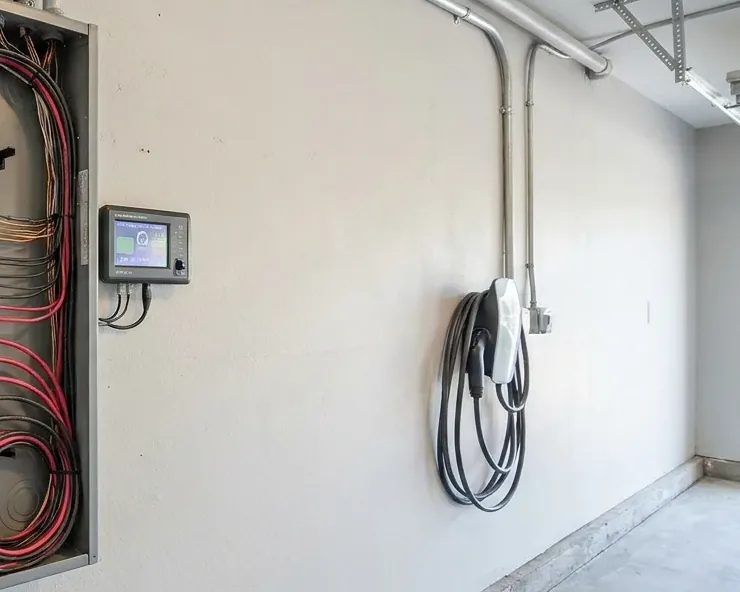
- EV charger power management — chargers that adjust charging current based on household demand (via a sensor on the service).
- Circuit-sharing devices — allow two large loads to share a circuit, but not run simultaneously.
- Smart panels and energy management systems — monitor and control circuits, sometimes integrated with solar and batteries.
Code recognition
Recent editions of the electrical code include provisions for energy management systems that limit load, which affects how they are counted in load calculations. Requirements are specific and evolving, so the electrician and inspector need to agree on how a system is treated for your installation.
Assessment
What an electrician typically evaluates
Every property is different. A qualified electrician will usually look at the following before recommending any work.
-
Existing service and panel
Rating, condition and spaces.
-
Load calculation
Current demand plus planned additions.
-
Which loads can be managed
EV charging and water heating are often flexible; cooking and medical equipment usually are not.
-
Device compatibility and listing
Equipment suitable for the application and recognized by the inspector.
-
User impact
How management affects charging times and comfort.
-
Upgrade comparison
When a service upgrade is still the better long-term choice.
Talk through your situation
A short call can help you understand what an on-site assessment would involve.
Local context
San Francisco housing considerations
Small services are common in San Francisco's older homes and flats, and service upgrades can be complicated by narrow lots, shared meter rooms, overhead drops and limited space for larger equipment. That makes load management particularly relevant here.
In multi-unit buildings, load management can let a building add EV charging or electrification capacity incrementally while avoiding a full service replacement — though at some point a larger service may still be the right investment.
Permitting
Permits and inspections
Installing load management devices, smart panels or new circuits generally requires an electrical permit through San Francisco DBI. The inspector will review how the system limits load. Utility involvement depends on whether service equipment changes.
Not legal advice. Permit requirements depend on the exact scope of work and the codes in force when the permit is issued. The provider performing the work is responsible for determining and obtaining the correct permits.
Frequently asked questions
Will load management make my EV charge slowly?
It can reduce charging speed when other large loads are running. For most overnight charging, the effect is modest, but it depends on your usage.
Is load management allowed by code?
Energy management systems are recognized in recent electrical codes, with specific requirements. Your electrician and the inspector determine how they apply to your installation.
Can load management replace a panel upgrade entirely?
Sometimes, sometimes not. If your equipment is in poor condition or your needs are large, an upgrade may still be appropriate. A load calculation and assessment answer this.
Does backup power relate to load management?
Yes. Battery and generator systems often include load management so essential circuits run within the system's output.
Official resources
Requirements change. Check current information directly with these official sources.
- San Francisco Department of Building Inspection (opens in a new tab) www.sf.gov Permits and inspections for electrical work in San Francisco.
- PG&E (opens in a new tab) www.pge.com The electric utility serving most San Francisco addresses; involved in service upgrades and meter work.
- CSLB license lookup (opens in a new tab) cslb.ca.gov Check a contractor's license number, classification and status before hiring.
Ready to talk to an electrical professional?
Call to speak with an electrical professional who can assess your property and explain your options.