

Panels
Electrical panel upgrades for modern loads
EV chargers, heat pumps and induction ranges are prompting many San Francisco owners to ask whether their panel can keep up. Sometimes the answer is an upgrade; sometimes it is careful planning.
Overview
Panel upgrade, service upgrade, or neither?
"Panel upgrade" is used loosely for several different projects:
- Panel replacement — swapping an old or problematic panel for a new one, often at the same capacity.
- Adding circuit space — a larger panel or subpanel when there are no spaces left.
- Service upgrade — increasing the capacity delivered by the utility (for example, from 100 to 200 amps), which involves service conductors, the meter and utility coordination.
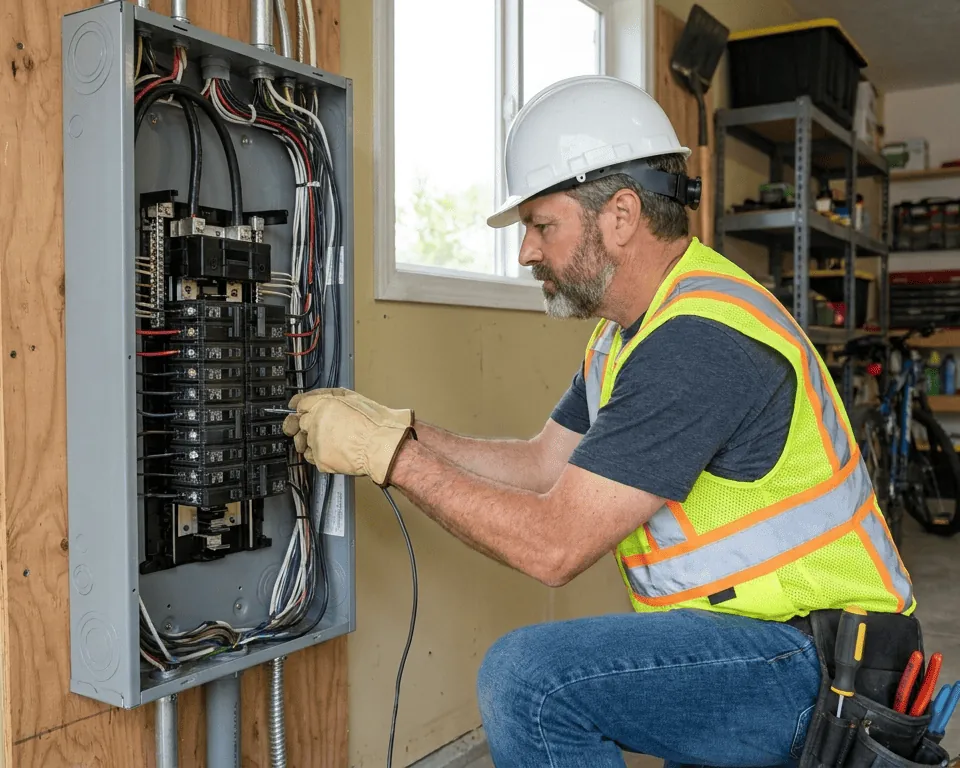
Which one you need — if any — depends on the condition of the existing equipment and on a load calculation of what you use now and plan to add. An upgrade is not automatically necessary for every new appliance, and not every requested upgrade will be approved as designed; the utility and DBI have their own requirements.
Bring to the conversation
- Main breaker amp rating
- Photos of the panel and label
- List of planned appliances with model numbers
Situations
Common reasons people look into this
-
Planning electrification
Moving from gas to electric for heating, water heating or cooking adds substantial load.
-
Adding an EV charger
Often the single largest continuous load in a home.
-
No spaces left in the panel
Tandem breakers and add-ons have limits; sometimes a subpanel or new panel is needed.
-
Older or problematic equipment
Panels showing heat damage, corrosion or brands with known concerns may warrant replacement regardless of capacity.
-
Frequent main breaker trips
May indicate that demand is exceeding capacity.
-
Major remodel or addition
New space and new circuits change the load picture.
Technical
Technical considerations
The load calculation
Electrical codes provide standard methods for calculating a dwelling's demand, applying factors to general lighting, appliances, and heating and cooling. The result is compared with the service rating. A home with a 100-amp service and modest existing loads may have room for a new circuit; one already near its limit may not.
Alternatives to a bigger service
- Load management devices can monitor demand and pause or reduce a load (often an EV charger) when the home approaches its limit.
- Lower-power equipment — such as EV chargers set to lower amperage, 120-volt heat pump water heaters or lower-amperage induction ranges — can reduce the need for added capacity.
- Smart panels offer circuit-level monitoring and control in some designs.
These options are evaluated in the electrical load management page.
Equipment beyond the panel
A service upgrade can involve the weatherhead or underground lateral, service conductors, meter base, grounding electrode system and the main disconnect, as well as utility work on its side of the connection.
Assessment
What an electrician typically evaluates
Every property is different. A qualified electrician will usually look at the following before recommending any work.
-
Existing panel and service rating
Main breaker size, bus rating and service conductor size.
-
Condition and safety
Signs of overheating, corrosion, double-tapped breakers and equipment with known concerns.
-
Load calculation
Current loads plus planned electrification, compared with capacity.
-
Options
Same-size replacement, subpanel, service upgrade or load management — with trade-offs explained.
-
Location and clearances
Working space in front of the panel and meter location requirements.
-
Utility requirements
Whether the utility needs to upgrade or modify service, and lead times.
Talk through your situation
A short call can help you understand what an on-site assessment would involve.
Local context
San Francisco housing considerations
Many San Francisco homes and flats have services of 100 amps or less, sometimes 60 amps in older units. Meter banks for multi-unit buildings are frequently in basements or garages with limited space, and upgrading one unit's service may be constrained by the building's overall service.
Overhead service drops are common on older blocks, while newer construction and some redeveloped areas have underground service. These differences affect what a service upgrade involves and how long utility coordination may take.
Permitting
Permits and inspections
Panel replacements and service upgrades require an electrical permit and inspection through San Francisco DBI. Service upgrades also require coordination with the electric utility (PG&E for most addresses), which has its own application and scheduling process. Some utility equipment changes may take weeks to schedule.
The contractor should handle permitting and utility coordination. Ask them to explain each step and its expected timeline.
Not legal advice. Permit requirements depend on the exact scope of work and the codes in force when the permit is issued. The provider performing the work is responsible for determining and obtaining the correct permits.
Frequently asked questions
Do I need 200 amps to go all-electric?
Not necessarily. Many homes electrify on 100 amps or less using careful equipment choices and load management. A load calculation for your actual home and plans is the only reliable way to know.
Can a panel upgrade be denied?
Plans must meet code and utility requirements. The utility may have constraints on service size or equipment location, and DBI inspections must pass. A qualified contractor will design the upgrade to meet those requirements.
Is a subpanel the same as an upgrade?
A subpanel adds circuit spaces but does not increase the total capacity of your service. It can solve a "no spaces" problem but not a capacity problem.
How do I know my current service size?
The main breaker or main fuse is usually labeled with its amp rating. If you cannot find it, an electrician can determine it.
Official resources
Requirements change. Check current information directly with these official sources.
- San Francisco Department of Building Inspection (opens in a new tab) www.sf.gov Permits and inspections for electrical work in San Francisco.
- PG&E (opens in a new tab) www.pge.com The electric utility serving most San Francisco addresses; involved in service upgrades and meter work.
- CSLB license lookup (opens in a new tab) cslb.ca.gov Check a contractor's license number, classification and status before hiring.
Ready to talk to an electrical professional?
Call to speak with an electrical professional who can assess your property and explain your options.