Multifamily
Electrical repairs for San Francisco apartments and condos
In apartments and condos, electrical repairs involve one more question than in a house: whose system is it? Understanding the boundary between your unit and the building helps get the right person involved.
Overview
Repairs inside a shared building
Typical apartment electrical repairs include outlets or switches that stop working, light fixtures that fail or flicker, breakers that trip, and GFCI outlets in kitchens and bathrooms that will not reset. Most are localized and straightforward for a qualified electrician.
What makes apartments different is shared infrastructure. Your unit's panel may be fed from a meter bank in the basement; hallway lighting, laundry rooms and garages are usually on house circuits; and a problem that looks like it is in your unit can start in common equipment. In condominiums, the HOA's governing documents typically define which components belong to the unit owner and which belong to the association.
Renting?
In rentals, electrical repairs are generally the property owner's responsibility. Report problems to your landlord or manager in writing. Do not hire an electrician for building wiring without the owner's approval.
Situations
Common reasons people look into this
-
Dead outlets or switches
Often a tripped GFCI elsewhere, a failed device or a loose connection.
-
Breakers tripping in the unit
Small apartment panels can be overloaded by space heaters, kitchen appliances and window AC units.
-
Flickering lights
From a loose bulb to a loose neutral connection; widespread flicker deserves prompt attention.
-
Light fixture replacement
Older ceiling boxes may not support heavier fixtures or ceiling fans.
-
Not enough outlets
Older units can have few outlets per room, encouraging extension cords and power strips.
-
Renovating a condo
Kitchen and bathroom remodels typically require new circuits and protection.
Technical
Technical considerations
Unit panels and capacity
Many San Francisco apartments have small unit panels — sometimes 30 to 60 amps in older buildings. That limits how many high-draw appliances can run together. A breaker that trips when the microwave and space heater run at the same time is doing its job; the solution is load distribution or added capacity, not a larger breaker.
Neutral and shared-circuit issues
Older buildings sometimes have shared neutral conductors or circuits that cross between units or into common areas. Unusual symptoms — lights brightening when an appliance starts, or problems in more than one unit — can point to a building-level issue such as a loose neutral, which should be investigated promptly.
Protection devices
GFCI protection is commonly required in kitchens, bathrooms and other wet locations; AFCI protection requirements have expanded in newer code cycles. When circuits are modified, current protection requirements may apply.
Assessment
What an electrician typically evaluates
Every property is different. A qualified electrician will usually look at the following before recommending any work.
-
The symptom and its pattern
When it happens, which outlets or lights are affected, and what else is running.
-
Unit panel
Breaker condition, labeling, sizing and available capacity.
-
Affected devices and connections
Loose or back-stabbed connections, failed devices and signs of heat.
-
GFCI and AFCI protection
Location of protective devices and whether they are functioning.
-
Unit versus building boundary
Whether the problem is in the unit's wiring or in common equipment.
-
Approvals needed
Owner, manager or HOA approval for work beyond simple repairs.
Talk through your situation
A short call can help you understand what an on-site assessment would involve.
Local context
San Francisco housing considerations
San Francisco has a large stock of older multifamily buildings — two- to six-unit flats, larger pre-war apartment buildings, and converted single-family homes — alongside modern condo towers in areas such as SoMa and Mission Bay. Older buildings often have small unit services and wiring updated piecemeal by different owners.
San Francisco also has rent control and tenant protection rules that can affect how and when work in occupied rental units is scheduled. Property owners planning significant electrical work in occupied units should review current requirements with the San Francisco Rent Board or legal counsel.
Permitting
Permits and inspections
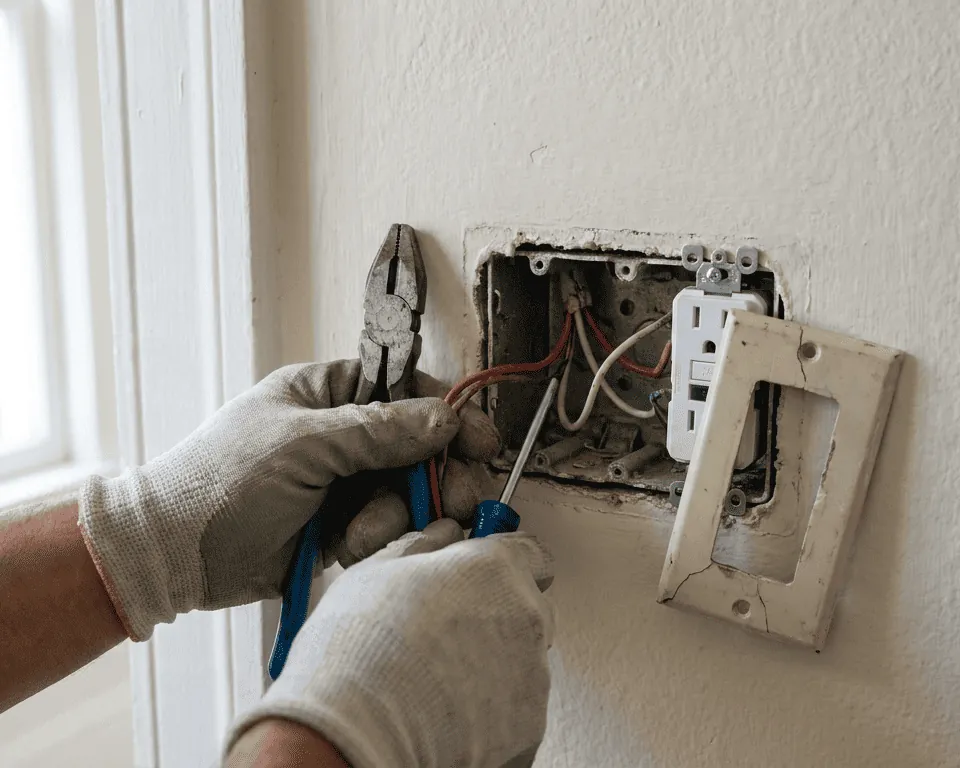
Simple device replacements may not require a permit, but adding or modifying circuits, replacing panels and remodel wiring generally do, issued through San Francisco DBI. In multi-unit buildings, work affecting common areas or building service equipment must be authorized by the owner or HOA.
The electrician should confirm what permits apply to the specific repair.
Not legal advice. Permit requirements depend on the exact scope of work and the codes in force when the permit is issued. The provider performing the work is responsible for determining and obtaining the correct permits.
Frequently asked questions
Who pays for electrical repairs in a rental?
Generally the property owner is responsible for maintaining the building's electrical system in safe working order. Tenants should report problems to the landlord or manager. For specific disputes, consult the San Francisco Rent Board or a tenant or landlord attorney.
Can my condo HOA require its own electrician?
For common elements and some building systems, HOAs often set requirements for contractors, insurance and approvals. Check your CC&Rs and HOA rules.
Why does my GFCI outlet keep tripping?
It may be detecting a genuine ground fault in an appliance or wiring, moisture, or the device may be failing. Persistent tripping should be diagnosed rather than ignored.
Is it okay to use power strips to add outlets?
Occasional use of quality power strips is common, but relying on chains of strips and extension cords is a sign that the unit needs more outlets or circuits.
Official resources
Requirements change. Check current information directly with these official sources.
- San Francisco Department of Building Inspection (opens in a new tab) www.sf.gov Permits and inspections for electrical work in San Francisco.
- CSLB license lookup (opens in a new tab) cslb.ca.gov Check a contractor's license number, classification and status before hiring.
- San Francisco Rent Board (opens in a new tab) www.sf.gov Information on rental housing rules in San Francisco.
Ready to talk to an electrical professional?
Call to speak with an electrical professional who can assess your property and explain your options.