
Lighting
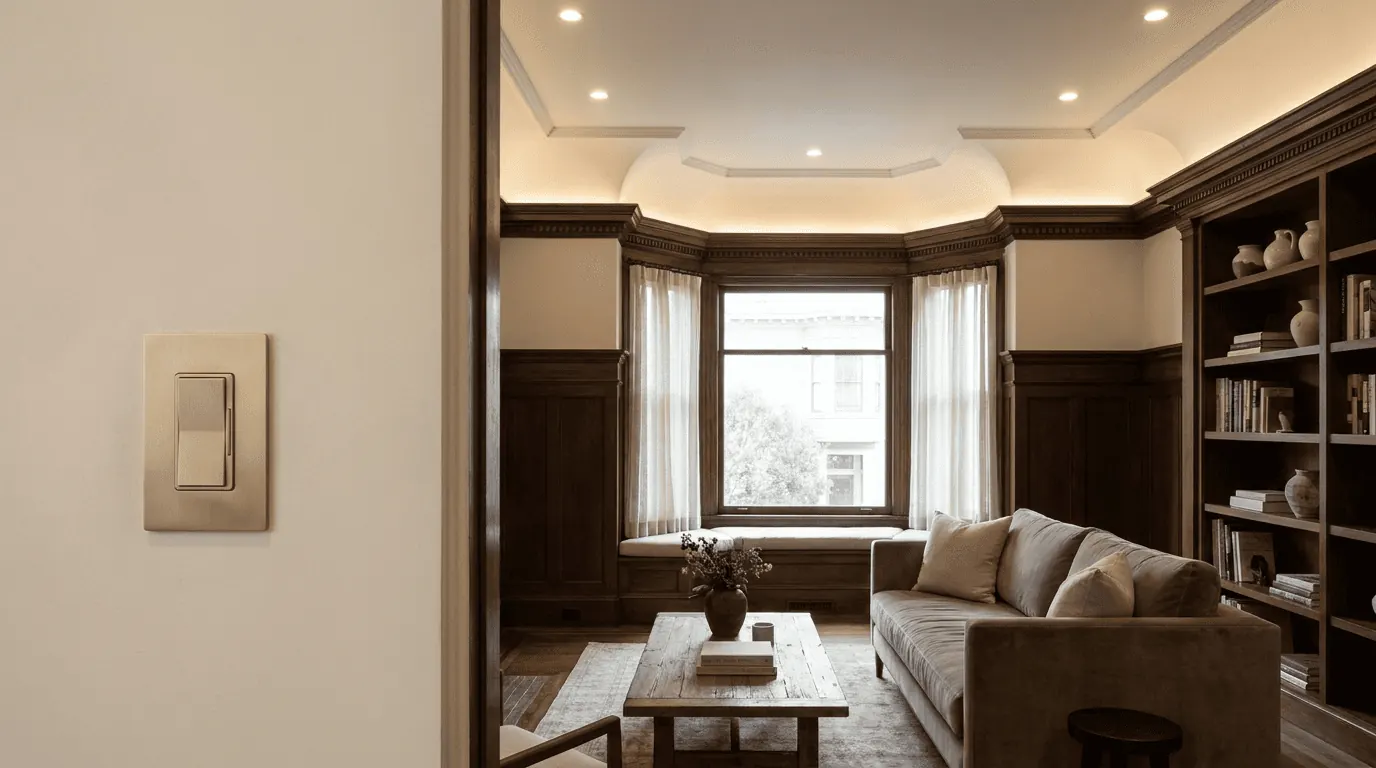
Lighting, dimmer and control installation
Good lighting transforms older homes — but LED compatibility, missing neutral wires and plaster ceilings make planning important.
Overview
From fixtures to controls
Lighting projects range from replacing a fixture to designing layered lighting with dimmers and scene controls. Common requests include:
- Fixture replacement, including heavier fixtures and ceiling fans.
- Recessed and low-profile LED lighting in kitchens, living spaces and hallways.
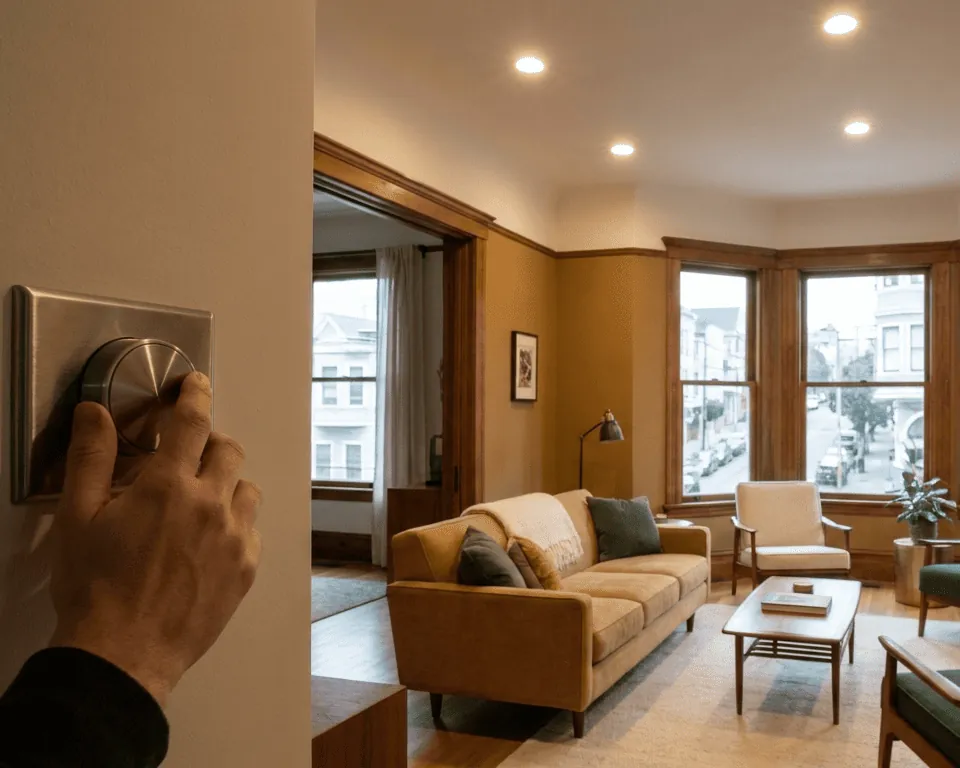
- Dimmers for ambiance and energy savings.
- Smart switches and controls for scheduling and remote control.
- Exterior and garage lighting.
With LED lighting now standard, the most frequent problems are compatibility between dimmers and LED fixtures — flicker, buzzing, or limited dimming range — and missing neutral wires in older switch boxes.
Avoid flicker
Check dimmer manufacturers' compatibility lists for your LED fixtures or bulbs, and match the dimmer type to the load.
Situations
Common reasons people look into this
-
Dark rooms in older homes
Original layouts often had a single ceiling fixture or none.
-
LEDs flicker on dimmers
Compatibility or minimum-load issues.
-
Smart switch will not install
Often because the switch box has no neutral wire.
-
Kitchen remodel
Task and ambient lighting design.
-
Heavy fixture or ceiling fan
Boxes must be rated for the weight and fan support.
-
Exterior lighting
Wet-rated fixtures and protected circuits.
Technical
Technical considerations
Neutral wires
Older switch wiring often brought only the switched hot conductors to the switch box, with no neutral. Many smart switches and some dimmers need a neutral to power their electronics. Options include adding a neutral, choosing "no-neutral" devices where appropriate, or relocating controls.
Recessed lighting in plaster ceilings
Modern canless LED fixtures need smaller openings and less ceiling depth than older recessed cans. Where insulation is present, fixtures must be rated for insulation contact (IC-rated). Ceiling joist direction and access from above affect layout.
Energy code
California's energy code includes lighting requirements for new construction and some alterations, such as high-efficacy fixtures and controls in certain spaces. Your electrician can explain what applies to your project.
Assessment
What an electrician typically evaluates
Every property is different. A qualified electrician will usually look at the following before recommending any work.
-
Existing boxes and wiring
Neutral availability, box size and condition.
-
Fixture weight and support
Rated boxes for heavy fixtures and fans.
-
Ceiling structure and access
Joist direction, depth and access from attics or floors above.
-
Dimmer and LED compatibility
Matching controls to fixtures.
-
Insulation contact
IC-rated fixtures where needed.
-
Circuit capacity
Rarely limiting for LEDs, but checked when adding circuits.
Talk through your situation
A short call can help you understand what an on-site assessment would involve.
Local context
San Francisco housing considerations
San Francisco Victorians and Edwardians often have tall plaster ceilings, medallions and original fixture locations — beautiful, but limiting for recessed lighting. Flats with occupied units above or below limit access for routing wiring. Low-profile surface fixtures, wall sconces and lamps on switched outlets are common strategies.
In newer condos, concrete ceilings can make adding fixtures difficult; surface raceways or track lighting may be options.
Permitting
Permits and inspections
New circuits and new fixture locations commonly require an electrical permit through San Francisco DBI. Simple like-for-like fixture or switch replacements may not; confirm with your electrician.
Not legal advice. Permit requirements depend on the exact scope of work and the codes in force when the permit is issued. The provider performing the work is responsible for determining and obtaining the correct permits.
Frequently asked questions
Why do my LED lights flicker on a dimmer?
Most often because the dimmer and LED are not compatible, or the load is below the dimmer's minimum. Check compatibility lists; sometimes a different dimmer or fixture solves it. Persistent flicker without a dimmer may indicate a connection problem.
Can I install a smart switch without a neutral wire?
Some smart switches are designed to work without a neutral; many are not. An electrician can check your boxes and recommend options.
Can recessed lights go in a plaster ceiling?
Often yes, with careful layout. Canless fixtures need smaller openings. Ceiling structure and access determine feasibility.
Do I need a permit to replace a light fixture?
Simple replacements often do not, but new fixture locations or circuits generally do. Ask your electrician.
Official resources
Requirements change. Check current information directly with these official sources.
- San Francisco Department of Building Inspection (opens in a new tab) www.sf.gov Permits and inspections for electrical work in San Francisco.
- CSLB license lookup (opens in a new tab) cslb.ca.gov Check a contractor's license number, classification and status before hiring.
Ready to talk to an electrical professional?
Call to speak with an electrical professional who can assess your property and explain your options.