
Guide · 8 min read
Understanding Knob-and-Tube Wiring in Older San Francisco Homes
If your home was built before the 1940s, there is a reasonable chance some knob-and-tube wiring remains. Here is what that means — and what it does not.
The basics
How knob-and-tube wiring works
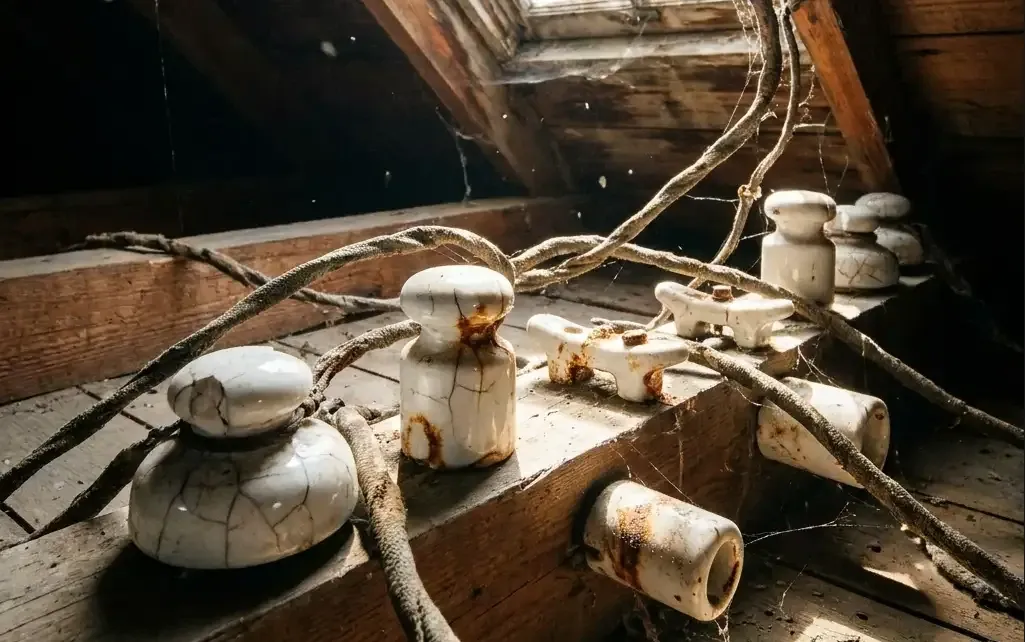
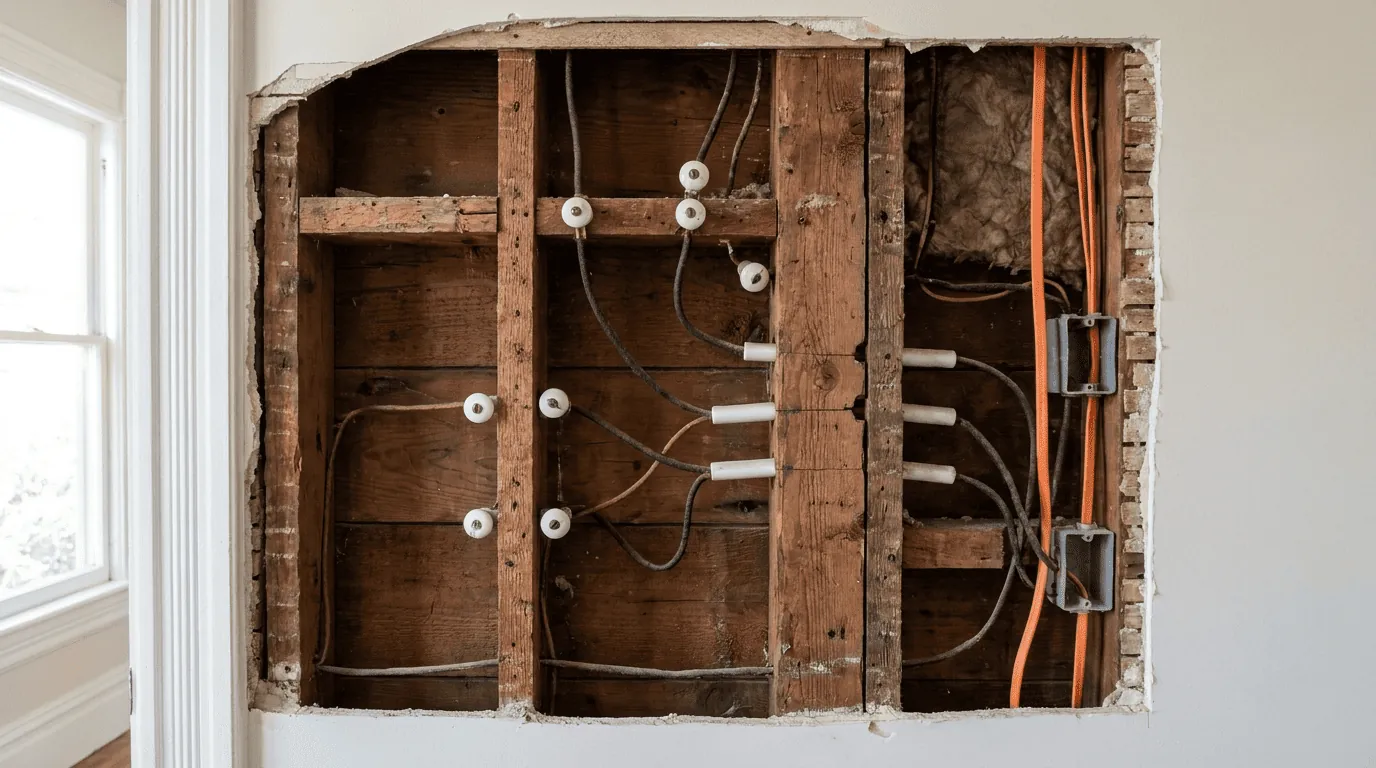
Knob-and-tube wiring uses individual conductors — one "hot" and one "neutral" — run separately through a building. Ceramic knobs hold the wires away from framing; ceramic tubes protect them where they pass through joists and studs. Where wires enter boxes or fixtures, they are often protected by flexible cloth sleeving called loom.
Because the conductors are separated and surrounded by air, heat dissipates readily. That design worked well for the electrical loads of the early twentieth century: a few lights and perhaps an outlet or two per room.
Local context
Why it is so common in San Francisco
Knob-and-tube was a standard wiring method in the United States from the late nineteenth century until roughly the 1930s and 1940s. San Francisco has a very old housing stock — city and Census-derived data suggest roughly half of the city's housing units were built before 1940 — and much of the city was rebuilt in the years following the 1906 earthquake and fire, precisely when knob-and-tube was the norm.
As a result, knob-and-tube is common in Victorians and Edwardians in neighborhoods such as Noe Valley, the Mission, the Castro, the Richmond, Pacific Heights and Bernal Heights, and in early homes in the Sunset and Excelsior. Many of these homes have been partially rewired, so it is common for knob-and-tube to remain only in certain rooms, attics or walls.
What matters
The real concerns
The presence of knob-and-tube alone is not proof of a hazard. These are the factors electricians focus on.
-
Aging insulation
Rubber and cloth insulation can become brittle and crack over many decades, especially where heated by light fixtures or disturbed.
-
No equipment ground
Knob-and-tube circuits have no ground conductor, limiting safe use of three-prong appliances and surge protection.
-
Insulation added later
Thermal insulation blown or packed around conductors designed for open air can interfere with heat dissipation.
-
Modifications
Splices to newer cable without junction boxes, extended circuits and over-sized fuses are often more hazardous than the original system.
-
Too few circuits
Original layouts were not designed for modern kitchens, home offices and electrification.
Evaluation
Inspection: what to expect
A focused electrical evaluation typically involves tracing circuits from the panel, inspecting accessible attics, basements and crawl spaces, opening a sample of outlet and switch boxes, and checking how circuits are protected. The electrician should be able to tell you roughly how much knob-and-tube remains, whether it is active or abandoned, and whether they found damage or risky modifications.
Ask for a written summary. It helps with planning, with insurance questions, and with future buyers.
Practical questions
Insulation, insurance and selling
Insulation. California's electrical code includes provisions on installing insulation around knob-and-tube wiring, and the conditions under which it may be allowed. Before insulating walls or attics containing knob-and-tube, ask a licensed electrician and San Francisco DBI what currently applies.
Insurance. Some insurers ask whether a home has knob-and-tube wiring and may have requirements for coverage. Practices vary by insurer, so ask yours directly.
Selling or buying. Home inspection reports frequently note knob-and-tube. A follow-up evaluation by a licensed electrician clarifies its extent and condition.
Options
Replacement options
Replacement usually means running new, grounded cable to replace knob-and-tube circuits and updating outlets and switches. Options include:
- Targeted replacement of damaged circuits or circuits in high-demand spaces such as kitchens and bathrooms.
- Phased replacement coordinated with remodels.
- Whole-home replacement of all remaining knob-and-tube.
In plaster-and-lath homes, experienced electricians route new wiring through attics, basements, closets and floor cavities to minimize openings. A rewiring project generally requires a permit and inspections, often including a rough-in inspection before walls are closed.
Frequently asked questions
Do I have to remove knob-and-tube wiring?
Existing knob-and-tube is not automatically required to be removed simply because it exists, but specific situations are restricted and new work must meet current code. Ask a licensed electrician and confirm with DBI for your property.
Can I just replace two-prong outlets with three-prong ones?
Not without a ground or another code-recognized remedy. Installing three-prong outlets on ungrounded circuits without proper protection and labeling creates a false sense of safety.
Is knob-and-tube a fire hazard?
It can be when insulation is deteriorated, when it is buried in thermal insulation, when it has been improperly modified or when it is overloaded. In good condition and unmodified, it may function safely. Only an inspection can assess a specific system.
Official resources
Requirements change. Check current information directly with these official sources.
- San Francisco Department of Building Inspection (opens in a new tab) www.sf.gov Permits and inspections for electrical work in San Francisco.
- CSLB license lookup (opens in a new tab) cslb.ca.gov Check a contractor's license number, classification and status before hiring.
Want a professional evaluation?
Call to speak with an electrical professional who can inspect your wiring.